
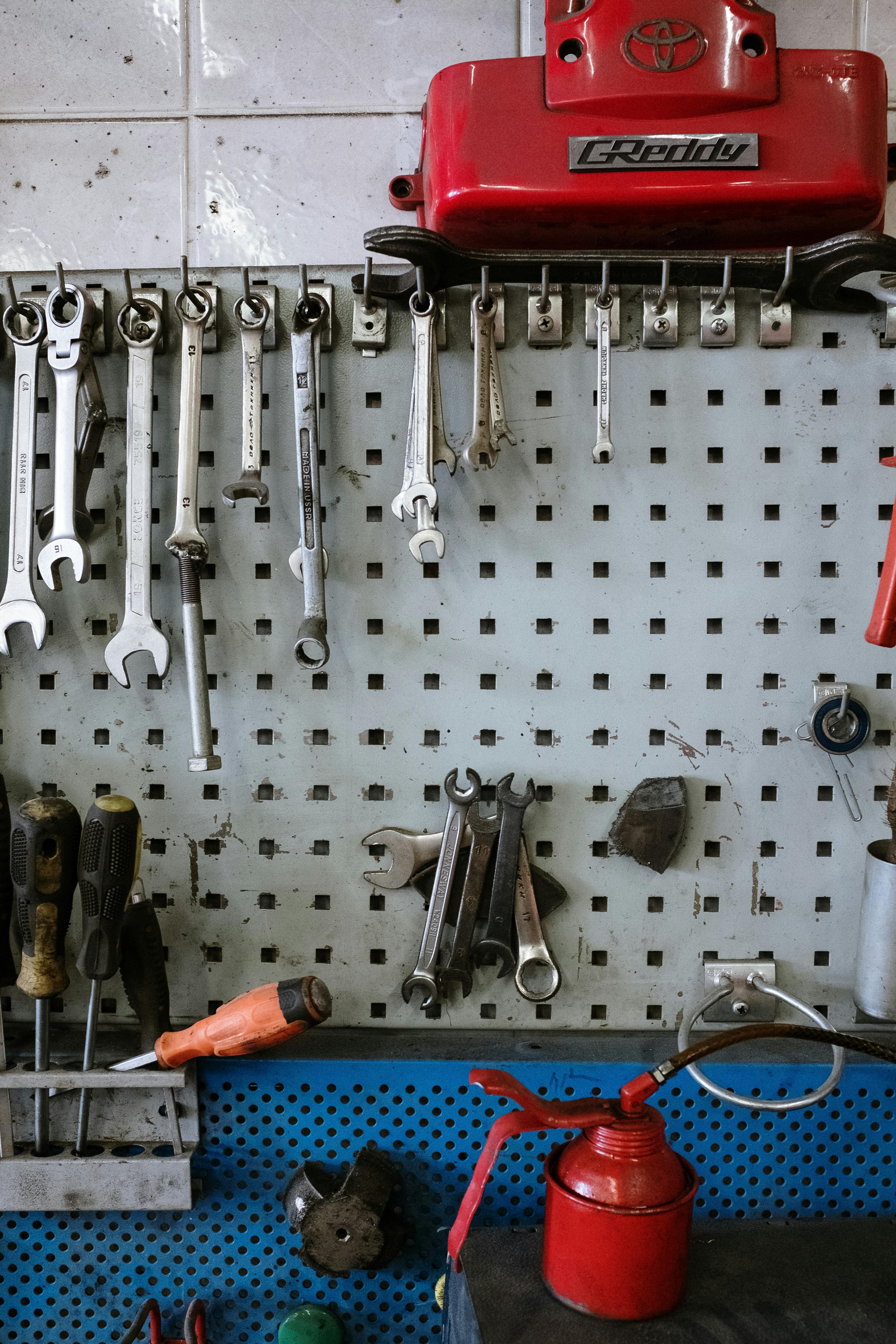

A messy garage or work area decreases productivity. It wastes time and is more prone to damage or accidents. It is not only about cleaning up. But also having a system in place that keeps order in the long run.
You must have an organized strategy that values accessibility, classification, and storage performance.
Here is how to create a practical organization system:
Assess your space
Start by clearing the space. Divide items into three categories:
- Frequently
- Occasionally
- Rarely or never used.
This step can be used to remove unnecessary clutter. Only the relevant tools and materials will be left.
Get rid of duplicates or unused items. This will leave space to arrange the layout of the place more effectively.
Apply a zoning system
Subdivide your garage or workspace into specific zones. This should be in terms of functionality. As an example, establish a distinct space for:
- Tools
- Maintenance supplies
- Hardware
- Project-specific
This form of zoning makes sure that related items are kept in one place.
High-use areas should be located in easy access. But less frequently used areas could be located at a further distance.
Take advantage of organized storage
Effective storage requires coherence and order. Consider options like:
- Open bins
- Drawer units
- Shelving systems
- Structured toolkits.
These options will help to create a better organized arrangement. For example, metal case toolkits offer compartmentalized storage. They ensure the safety of the items and make them easy to move around.
Organized storage also minimizes visual distraction. It enhances general accessibility.
Maximize horizontal and vertical rooms
Utilize all the space you have.
To utilize vertical spaces, consider:
- Wall-mounted shelves
- Peg boards
- Shelv
This ensures that commonly used tools are in sight and reach.
Horizontal surfaces must be as clean as possible to allow working room. Keeping the things off the floor also:
- Lessens the danger of damages
- Makes it easier to clean up.
Adopt a return-to-place system
An organization is only effective when it is a continuous practice. Each object must be placed in its designated location. In addition, it must be put back right after use.
The habit helps avoid the accumulation of clutter once more. It guarantees that tools will be ready whenever needed. This system can be easier to follow with visual cues, such as:
- Outlined tool shapes
- Labelled compartments.
Focus on accessibility and workflow
Organize your storage according to how you work.
- The tools and materials that are used together should be kept near each other.
- The most frequently used objects must be placed at eye or waist level. This will minimize strain and increase speed.
This arrangement reduces unnecessary movements.
Have a regular maintenance schedule
Even the best organizational system needs an occasional examination. Establish a schedule of:
- Checking misplaced items
- Rearranging the cluttered space
- Eliminating newly created clutter.
Minor, regular corrections can ensure that there are no significant clean-ups in the future. Maintenance guarantees that your system is in line with your evolving demands.
Adapt and refine over time
Last but not least, your storage needs will vary with your changing projects and tools. Be ready to:
- Change your layout
- Implement new storage options
- Redesign zones.
An adaptive system will support your productivity in a way that it does not become constraining.